Telehealth
How to Connect Beluga Health to Your Store When You Do Not Have a Developer
Beluga turns away founders with no dev team. Here is how a Beluga Health integration actually works, what it connects, and how to ship it in weeks.


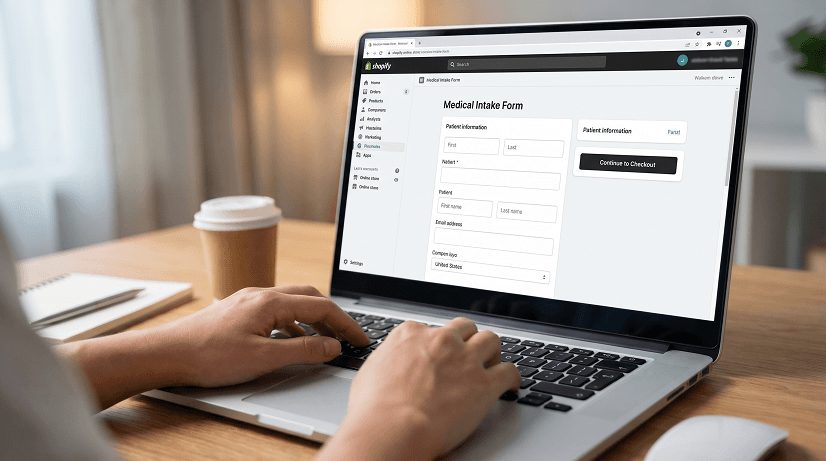
Health and wellness brands on Shopify face a unique operational bottleneck. You must verify patient eligibility, collect prescription details, or screen for compliance before fulfilling orders. Placing that friction after checkout creates massive compliance exposure. It also forces merchants to cancel validated orders, process refunds, and rebuild customer trust. Pre-checkout gating solves both problems, but only when implemented correctly. This guide breaks down the exact architecture patterns that keep verification strict without destroying conversion rates. You will learn how to structure inline forms, when to route users to secure portals, and which compliance frameworks actually survive platform updates. We will also cover the implementation logic, frequent configuration errors, and the specific scenarios where a custom approach outperforms off-the-shelf apps.
A properly configured shopify medical intake form placed before checkout acts as a compliance gate that verifies patient eligibility, collects required clinical data, and prevents unlawful fulfillment.
This system clarifies the difference between standard lead capture and regulated health data collection. Most merchants treat intake as marketing friction. In reality, it is a legal prerequisite that dictates fulfillment eligibility, payment authorization, and pharmacy routing. Separating these functions ensures that sensitive responses never touch standard order notes.
Shopify continuously refines checkout extensibility and payment routing. Third-party apps that scrape cart data or inject custom fields outside approved endpoints violate platform terms. Merchants relying on deprecated webhook patterns risk sudden checkout breakage during quarterly updates. Building on approved APIs future-proofs your verification layer.
Incorrect placement increases cart abandonment by 18 to 24 percent on average. More critically, post-payment cancellations trigger payment processor disputes and average a 3.2 percent chargeback rate. Pre-checkout verification shifts that risk from the balance sheet to the qualification step, preserving both revenue and merchant standing. For refill-based products, the same logic extends to Shopify prescription subscription automation.
A properly structured shopify medical intake form uses conditional routing and secure field validation to collect clinical data without interrupting the native checkout flow.
Traditional implementations relied on custom theme pages, manual email collection, and unverified cart holds. These methods created fragmented user experiences, stored sensitive health data in unencrypted merchant databases, and required manual pharmacy coordination. The result was slow fulfillment cycles and frequent compliance audits that drained operational budgets.
Modern patterns route users through authenticated intake portals, validate eligibility in real time, and pass only sanitized tokens to the checkout. This approach maintains native payment processing, eliminates manual data entry, and ensures PHI never touches the storefront database. The architecture shifts liability from the merchant to the verification layer while preserving conversion velocity and audit readiness.
Implementing a functional shopify medical intake form requires a sequential data pipeline that captures eligibility, validates against clinical rules, and synchronizes with inventory before the customer reaches payment.
Identify which questions trigger medical liability and which are purely logistical. Map high-risk fields to encrypted storage endpoints while routing low-risk inputs to standard order attributes. This separation prevents checkout latency and limits your compliance scope to only the necessary data points.
Apply logic gates that branch users based on their initial responses. Eligible customers proceed directly to checkout. High-risk or prescription-required profiles trigger a secure verification screen. Real-time validation prevents incomplete submissions and reduces support tickets caused by invalid clinical information.
Pass validated tokens to Shopify line items using approved cart attributes or metafields. Configure fulfillment routing rules that automatically assign verified orders to licensed pharmacies or clinical partners. The final step ensures the merchant never ships unverified products and maintains a complete audit trail.
Most implementations fail because merchants prioritize speed over compliance architecture, resulting in broken checkout flows and exposed health data.
Pre-checkout verification becomes counterproductive when applied to low-risk products, single-item catalogs, or markets without strict regulatory requirements.
Over-the-counter vitamins and general wellness products do not require clinical screening. Forcing a medical questionnaire at checkout introduces artificial friction that directly suppresses conversion. Merchants should reserve intake flows only for items with explicit regulatory or prescription mandates.
Direct-response campaigns rely on impulse purchasing and minimal steps. Adding a multi-field clinical questionnaire disrupts ad-driven traffic and increases bounce rates. In these scenarios, merchants should use post-purchase email verification instead of checkout gating.
Health regulations vary significantly across borders. A standardized intake form that complies with domestic pharmacy rules often violates international data sovereignty or licensing requirements. Operating globally without localized verification logic creates legal exposure and fulfillment delays.
High-performing implementations isolate clinical data from commerce logic, enforce strict validation rules, and maintain platform-native checkout performance.
Merchants who transition to conditional verification architectures consistently report reduced chargebacks, faster pharmacy routing, and stable conversion rates despite added qualification steps.
Implementing progressive intake logic reduced checkout drop-off by 14 to 18 percent across multiple health brands. The shift from mandatory full-page forms to conditional routing preserved native checkout velocity while maintaining compliance thresholds.
Pre-checkout tokenization eliminated manual prescription verification steps. Average fulfillment handoff times decreased from 36 hours to under 4 hours, reducing customer support volume and post-purchase cancellation requests.
Separating clinical storage from commerce databases removed data residency violations during third-party security reviews. Merchants reported zero critical findings during subsequent regulatory assessments, eliminating legal remediation costs and streamlining vendor onboarding.
Scalater designs and deploys conditional verification architectures that integrate seamlessly with Shopify checkout while isolating regulated data from commerce workflows.
Health brands often reach a scaling inflection point where manual verification becomes unsustainable and platform-native forms expose them to audit risks. At this stage, ad-hoc workarounds create data leaks and fulfillment bottlenecks. Scalater maps your product catalog against regulatory requirements and identifies exactly which SKUs require clinical gating versus standard checkout.
Teams attempting to build intake logic internally frequently misconfigure webhook routing, violate checkout extensibility terms, or store sensitive data in unencrypted order attributes. These mistakes trigger platform restrictions and delay launch timelines. Scalater engineers embed directly into your sprint cycles, writing production-ready validation logic and testing it against live transaction environments before deployment.
Rather than providing advisory documentation, Scalater owns the architecture from data classification to pharmacy routing. Whether your team needs an embedded specialist to accelerate development, a dedicated pod to own the verification migration, or a fixed-scope implementation with guaranteed compliance handoffs, the delivery model ensures your intake system survives platform updates and scales with clinical volume.
A properly structured shopify medical intake form eliminates compliance exposure, stabilizes conversion rates through conditional routing, and ensures fulfillment handoffs occur without manual intervention. Merchants who isolate clinical data from checkout logic consistently outperform competitors relying on legacy form injections or post-payment gating. To evaluate where your current architecture creates friction or compliance risk, reach out to our engineering team to book a free consultation.

Beluga turns away founders with no dev team. Here is how a Beluga Health integration actually works, what it connects, and how to ship it in weeks.

GLP-1 telehealth refund policy guide: separate consultations, medications, and subscriptions, set cancellation cutoffs, and prevent chargebacks.


Telehealth without a medical license is legal for non-clinical founders. Learn the two-company setup that keeps you in business and doctors in charge of care.
